Are you looking to install an EV charger in your Florida home?
As gas prices rise, EVs are becoming more popular among Florida drivers.
We've been installling an increased amount of EV chargers in Brandon, Ruskin, Riverview, Valrico, Parrish, Palmetto, and the surrounding areas. Homeowners are installing EV chargers for fast, convenient, reliable home charging.
Getting your EV charged up at home is pretty simple. But we want you to have all the information in advance, so our team put together this home EV charger installation guide to provide everything that’s needed to make the right decision.
In this guide, we’ll walk you through:
-
Hardwired vs. Plug-In EV Chargers
-
How Much Are Level 2 EV Chargers?
-
Which Type of EV Charger to Get?
-
EV Tax Credit
- Other related information
While there’s a lot to cover and we’re only going over the basics, we’ll include links to helpful resources and other blogs with additional EV charger installation information.
Hardwired vs Plug-in EV Chargers
One key decision to make is whether to go with a hardwired or plug-in EV charger. While both options are designed to keep your car powered up, there are notable differences that can impact installation, convenience, and even long-term flexibility. Let’s break down the pros and cons of each type to help you decide which EV charger might be the best fit for your home.
Hardwired EV Chargers
A hardwired EV charger is permanently connected to your home’s electrical system on a dedicated circuit, rather than plugged into a standard outlet. Installation usually requires a licensed electrician. Many homeowners in Brandon, Valrico, Riverview, and the greater Tampa area are choosing Level 2 hardwired chargers for home use.
Learn more: Hardwired or Plug-In EV Chargers for My Home - Bryan Hindman Electric
Pros of Hardwired EV Chargers:
-
Sleek and Permanent: Hardwired chargers have a clean, built-in look with no visible plugs or sockets.
-
Outdoor-Friendly: They are well-suited for outdoor use because they are typically more weatherproof and durable than plug-in models.
-
Higher Power Options: Hardwired chargers can support higher amperages for faster charging.
Cons of Hardwired EV Chargers:
-
Fixed Installation: They are not easily moved and usually require an electrician to uninstall and reinstall.
-
Upfront Installation Cost: Installation is often more expensive because professional electrical work is required.
Plug-In EV Chargers
Plug-in EV chargers don’t require hardwiring. There are Level 1 and Level 2 plug-in chargers. As the name suggests, plug-in chargers connect to an outlet rather than being permanently wired, making them a versatile option for many homeowners.
-
Level 1 Plug-In EV Chargers are the chargers that come with most EVs.
-
Level 2 Plug-In EV Chargers use a standard 240-volt outlet, similar to the kind used for large appliances.
Pros of Plug-In EV Chargers:
-
Portability: Plug-in chargers can be unplugged and moved, making them a great option for renters or homeowners who may relocate.
-
Simple Installation: If you already have a 240-volt outlet in your garage, you can install a plug-in EV charger without additional electrical work.
-
Flexibility for Upgrades: Replacing a plug-in charger is usually easier and less expensive than removing a hardwired unit.
Cons of Plug-In EV Chargers:
-
Indoor Preference: Plug-in chargers are often less weather-resistant than hardwired units, so they are generally better suited for garages or covered areas.
-
Outlet Limitations: Not all homes have a 240-volt outlet where it’s needed, and installing one can add to the overall cost.
How Much Are Level 2 EV Chargers?
Let’s look at the cost of installing Level 2 EV chargers.
Cost to Install a Level 2 Hardwired Charging Station
For many homes, installation costs are about $580, assuming:
-
The charger is within 20 feet of the panel
-
The installation is indoors
-
There are no unusual circumstances
This estimate does not include the $225 permit fee, which covers the permit and inspection-related administrative work.
Cost to Install an EV Charging Outlet for a Level 2 Plug-in Charger
Install a dedicated 240-volt outlet for EV charging. This lets you plug your vehicle’s charging cord directly into the outlet
For many homes, installation costs about $850, assuming:
-
The charger is within 20 feet of the electrical panel
-
The installation is indoors, such as in a garage
-
There are no unusual installation challenges
Permit fees are not included. The permit costs $225.
That fee covers the permit and the administrative work required to submit paperwork, coordinate inspections, and close it out properly.
GFCI Protection
The National Electrical Code requires GFCI protection for EV charging outlets. While this improves safety, it can sometimes cause nuisance tripping with EV chargers. Since many chargers already have built-in protection, pairing them with a GFCI breaker can lead to unexpected trips. For homeowners, that means resetting the breaker at the panel before charging again.
Which Type of EV Charger to Get?
When deciding between a hardwired and plug-in EV charger, consider the charger's location, any future relocation plans, and existing infrastructure.
-
Location of the Charger: If the charger will be installed outdoors or in an area exposed to the elements, a hardwired option may be a better choice for durability.
-
Future Relocation Plans: If you may move in the near future, a plug-in charger’s portability can be a significant advantage.
-
Existing Infrastructure: If you have a suitable outlet, a plug-in charger is a convenient, cost-effective option. Otherwise, installing a hardwired charger is typically more affordable.
Hardwired Installation is Usually More Affordable
Bryan, our head electrician, usually recommends the more affordable option: the Level 2 hardwired charging station. Not just because it costs less, but because it is often simpler and more reliable for homeowners.
Since it is hardwired, indoor installations typically do not require a GFCI breaker, which means fewer nuisance trips. GFCI protection is usually only needed outdoors.
So while it may seem like the more advanced option, it often ends up being the simplest system to live with long-term.
Want to know more? Take a look at Yes, We Sometimes Recommend the Cheaper EV Charger Option for Your Home.
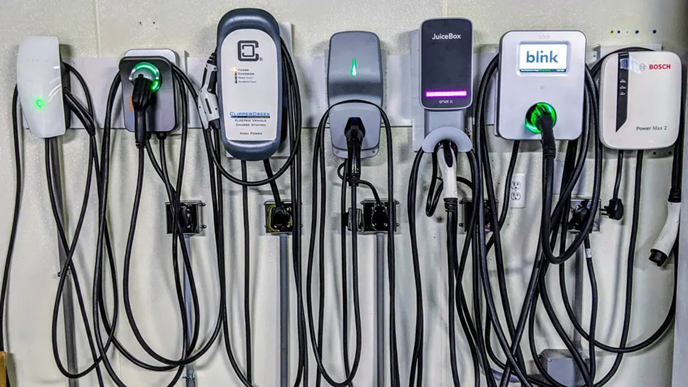
Which is the Best Level 2 EV Charger for Your Home
There are a lot of options on the market depending on what your needs are. Here are the Top 3 EV Charger Brands for 2025:
-
ChargePoint (Home Flex): Stands out for its polished mobile app, advanced charging timers, and adjustable power settings, which help drivers better control electricity expenses.
-
Tesla (Universal Wall Connector): Comes with an integrated all-in-one plug that works with both Tesla (NACS) and J1772 vehicles, making it a smart long-term fit for mixed-EV households.
-
Grizzl-E (Classic/Ultimate): Widely recognized for its rugged aluminum housing and strong resistance to harsh weather, making it a dependable option for Florida’s heat and heavy rain.
What Can Increase the Cost of EV Charger Installation?
While our estimated prices are common starting points, installation costs may increase depending on your home. Let’s look at the different factors.
Distance From Panel
One of the biggest factors is distance from your electrical panel.
For example: Installations within 20 feet of the panel typically stay close to the estimates above.
A 50-foot run could raise the cost to $1,800 or more.
This happens because longer runs require:
-
More wire
-
More conduit
-
More labor
-
More installation time
Wondering where exactly in your garage to install your new EV charger? See Where to Install a Car Charger in Your Garage to learn more.
Whether Panel Upgrade is Needed
Occasionally, the electrical panel needs to be upgraded to safely and reliably power an EV charger.
-
Limited electrical headroom: Many older service panels do not have enough spare capacity to handle additions like a new EV charger or hot tub while continuing to support the rest of the home’s electrical demand.
-
Signs of strain: Breakers that trip often, lights that dim or flicker when larger loads turn on, or a panel that feels unusually warm can all point to a system that is operating close to its maximum load.
-
Aging or hazardous components: Certain legacy panels and breakers have a history of defects and safety concerns. If we discover one of those models or notice visible deterioration, such as rust, corrosion, or heat damage to wiring insulation, replacing the panel becomes an important safety measure.
Here's our Do I Need a New Panel to Install an EV Charger, Golf Cart Charger, or Spa blog if you'd like more information about whether a panel upgrade would be needed.
Every home is different, which is why we always review the layout before giving a final quote.
EV Tax Credit
You may be able to claim the Alternative Fuel Vehicle Refueling Property Tax Credit if you install equipment at your home or business for alternative fuel use or EV charging.
The credit applies to individuals and businesses that install eligible fueling or charging equipment, including EV chargers, at a qualifying site. Some tax-exempt and government entities may also claim it through elective pay.
Click here to check their website and see if you qualify.
EV Chargers: Choose What’s Best for Your Home
We hope this home EV charger installation guide has helped you feel confident in making the right decision.
When homeowners contact us about EV charger installation, our goal isn’t to sell the most expensive option. It’s to help you choose the most practical and cost-effective setup for your home.
In some cases, that may be a simple outlet. In many others, a Level 2 charging station turns out to be the better and more affordable choice. Either way, we’ll explain your options clearly so you can make the decision that best fits your home.
Looking for EV charger installation in Brandon, Ruskin, Riverview, Valrico, Parrish, Palmetto, or surrounding areas? Call or text us at (813) 672-4084 or request a service and we'll provide you with a no-pressure customized quote.
Click here to visit our EV charger page for more information.

.png)
-1.png)