Are you a Tampa Bay area homeowner considering EV charger, golf cart charger, or hot tub installation, but you're not sure about your electrical panel?
Maybe you’ve been told you’d need a full electrical panel upgrade to power your new electric vehicle or hot tub, which, understandably, might seem stressful and expensive.
Here’s the truth about whether you need an electrical panel upgrade to install an EV charger: sometimes a new electrical panel is necessary for safety and capacity, but a lot of local homeowners we've met have been advised to upgrade when they often don’t need to.
Let’s look at what we need to consider to determine whether your electrical panel can handle an EV charger install or a Florida backyard oasis hot tub addition, or if the unit should be swapped out with a new one for better performance.
Key Factors in Panel Replacement for a Home EV Charger
When we evaluate your system to see if the current panel is suitable for a home EV charger, golf cart charger, or spa, these are all the key factors we consider:
1. Panel capacity (amp rating): Your main service and panel have a maximum amp rating (commonly 100A, 125A, 150A, or 200A). This limits how much electrical load your home can safely support.
2. Existing electrical load: We review what’s already connected (HVAC, range, oven, dryer, and other large appliances) to see how much capacity is already being used.
3. The new load you want to add:
Level 1 vs. Level 2 EV chargers, golf cart chargers, and spas can draw significant power:
-
-
-
Level 1 EV chargers commonly need a 15–20A dedicated circuit.
-
Level 2 EV chargers commonly need a 40–60A dedicated circuit.
-
Many spas need a 50–60A dedicated circuit.
-
Golf cart chargers usually draw less but still add to your total load.
4. Panel condition and safety:
Even if capacity seems to be ok, an old, damaged, recalled, or improperly installed panel may still need to be upgraded for safety.
Once we’ve evaluated these factors, we can determine whether a new panel is truly necessary.
Installing an EV Charger Without a New Panel
In many Florida homes, there’s still room in the existing system to add an EV charger or hot tub. If your panel has enough capacity, is in good condition, and has space, you may only need:
• A dedicated circuit: A new breaker and properly sized wiring that runs directly from your panel to your EV charger, spa, or golf cart charger. When there’s available capacity and breaker space, this is often all that’s needed.
• A subpanel: A smaller secondary panel fed from your main panel. A subpanel adds breaker spaces and helps organize circuits in areas like garages, additions, or detached buildings.
Both of these options are usually much more cost‑effective than a full panel replacement. Instead of tearing out what you already have, we modify it in a safe, code‑compliant way.
Unnecessary panel recommendations are common
A homeowner recently contacted us after another company insisted on a full panel replacement before installing an EV charger, quoting a price several thousand dollars higher than they had expected.
We performed a thorough inspection: checked the panel age and condition, service size, existing loads, and wiring. The panel itself was in good shape; the main issue was a few worn breakers.
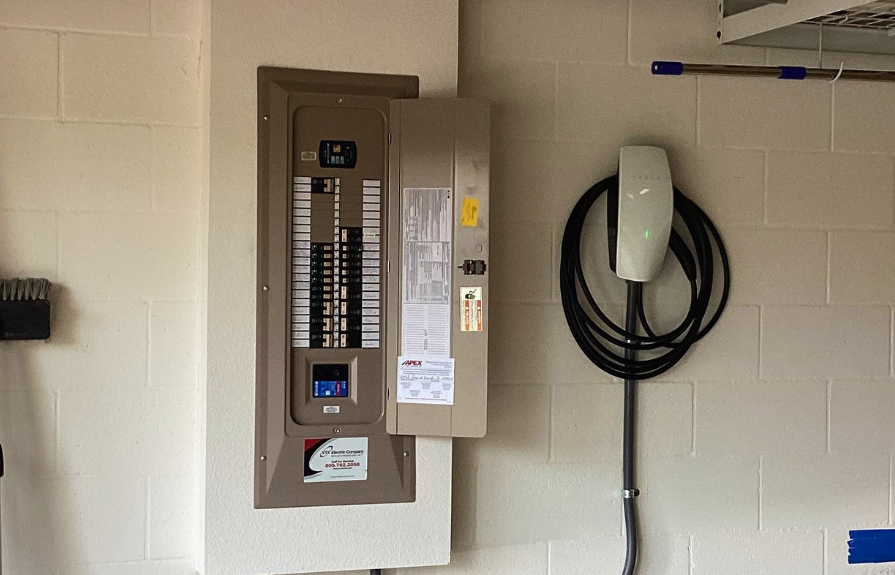
Instead of a complete panel upgrade, we replaced the faulty breakers and installed a dedicated circuit for their at-home EV charger.
Their existing panel stayed in place and their charger was installed safely and up to code; they ended up saving thousands of dollars.
When A Panel Upgrade is Needed
There are times when upgrading your electrical panel before adding an EV charger, golf cart charger, or spa is the right move. One clear and simple reason is that there isn’t enough capacity, and the panel is too old to power numerous modern appliances.
Another common issue we encounter is damage. When we open the panel, we sometimes find damaged or unsafe equipment, which often indicates the need for a panel upgrade.
Let’s review the panel situations that might require an upgrade, so you’re all set to install your vehicle charger or spa:
• Insufficient capacity: Older panels may not have enough available capacity for a modern EV charger or spa on top of existing appliances.
• Frequent tripping or overheating: Regular breaker trips, flickering lights under load, or a hot panel are warning signs your system may already be near its limits.
• Outdated or unsafe equipment: Some older panels and breakers are known for safety issues and failures. If we find one of those brands or see physical damage, like corrosion or melted insulation, replacement becomes a safety priority.
• Major remodels or additions: If you’re renovating, adding square footage, or installing several new high‑demand appliances, it’s an ideal time to modernize your electrical system and plan for future capacity.
In these situations, upgrading your panel often helps ensure your system can safely handle current and future loads, reduces the risk of electrical fires or failures, and helps your home meet current electrical codes and standards.
Remember: Always hire a licensed electrician for any electrical work so the job gets done safely and to a high standard.
To Panel Upgrade or Not to Panel Upgrade
You don’t always need a full panel upgrade to add a home EV charger, golf cart charger, or spa. Every home and electrical system is different, and the only way to know what you truly need is through a professional evaluation with a trusted electrician.
Our electricians focus on safety, your budget, and your future needs, whether that means a full panel upgrade or a simple dedicated circuit or subpanel.
If you’re unsure whether your panel can handle a home EV charger, golf cart charger, or spa, you can read more on our website.
Are you in Riverview, Apollo Beach, Sun City Center, FishHawk, or the surrounding area? We’re here to help you find the most cost-effective solution for your EV charger installation so you can move forward with confidence.
Click here to look at our transparent pricing guide and give us a call at 813-812-8840. You can also submit your request through our online form by clicking here.
Here are some other blogs related to panel upgrades that you might want to check out:
4 Electrical Panels Insurance Companies Won’t Cover in Florida
Does a Panel Change Increase the Value of My House?

.png)
-1.png)