If you've done any online searches about electrical panels, you've possibly been swayed to believe that almost every home always needs a panel upgrade to support an EV charger or appliance addition.
It turns out that most homes don't need an electrical panel redo in order to handle a lot of common home improvements. We regularly see many homes in the Tampa Bay area already have electrical panels that can, as-is, safely handle the electrical load that a modern household requires.
There certainly are, however, circumstances where upgrading an outdated or faulty panel is the safest and most practical option.
In this article, we'll go over what electrical panels do, when panels upgrades are and aren't necessary, how electricians evaluate electrical panels, and more.
What an Electrical Panel Actually Does
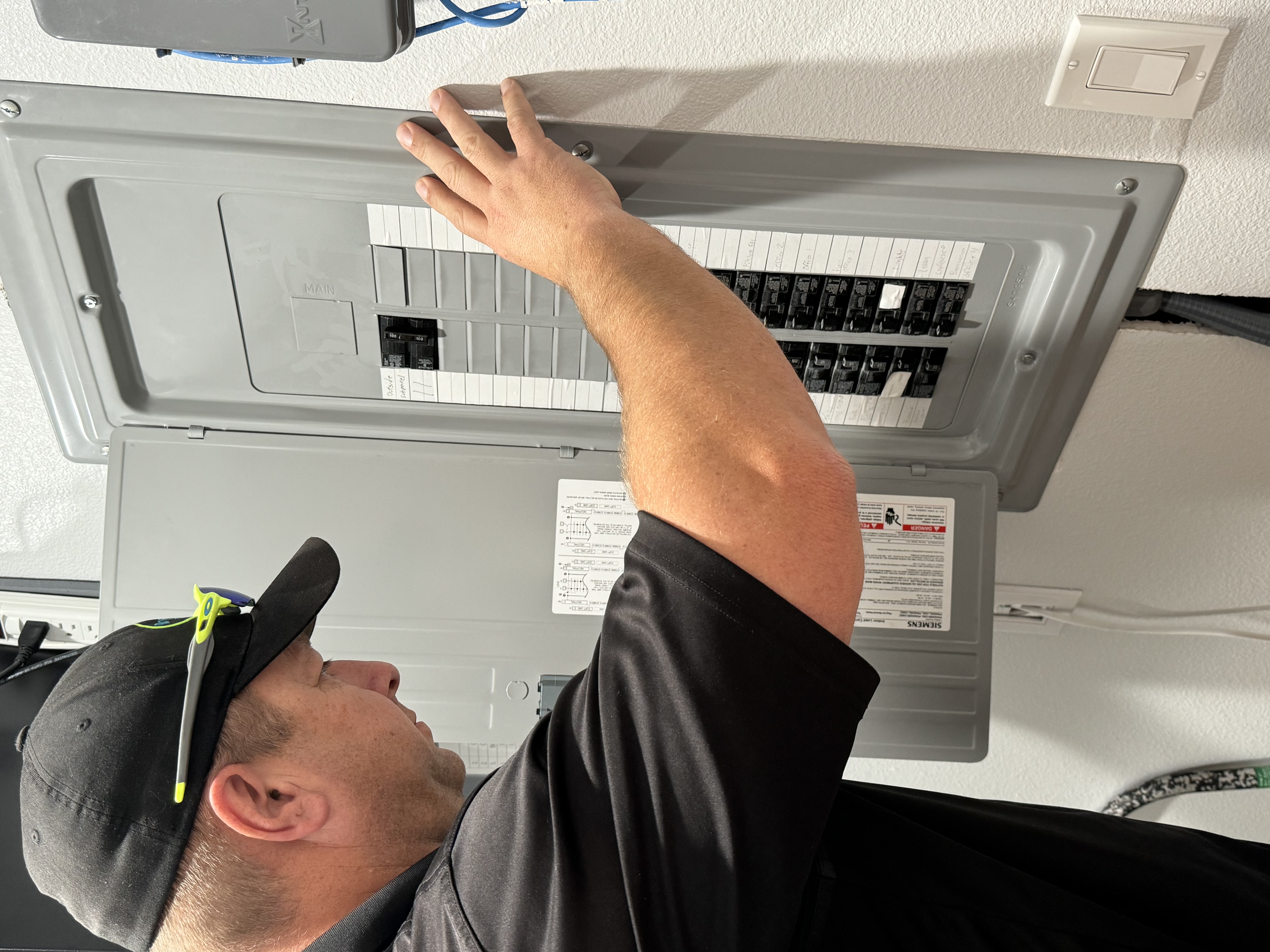
Your electrical panel is the central hub that distributes electricity throughout your home.
The electrical panel controls:
- Circuit breakers
- Power distribution
- Protection from overloads
A properly functioning panel keeps your electrical system and home safe.
Most modern homes are built with panels capable of handling everyday electrical needs.
The Good News: Most Homes Don’t Need a Panel Upgrade
Many homeowners assume they need a panel upgrade whenever they add something new, like an EV charger or appliance.
In reality, that’s often not the case.
If your panel is in good condition and has available breaker space and sufficient amperage, then an upgrade may not at all be necessary.
An electrician can perform a load calculation to determine whether the panel can handle additional electrical demand. If your home is fairly new (5, 10, 15+ years) and an electrician tells you a panel change is needed, you should absolutely get a second opinion!
When an Electrical Panel Upgrade Is Necessary
There are circumstances when replacing or upgrading a panel is the safest solution.
Common reasons to upgrade a panel include: outdated electrical panel, homeowners insurance requirements, frequent electrical problems, and renovations/additions.
Outdated Electrical Panels
Older panels, such as Federal Pacific or Zinsco panels, are known to have safety issues.
You can learn more about older electrical panel brands that may require replacement in our guide.
Your Homeowners Insurance Policy Flags It
Many insurance companies are now requiring homeowners to change older electrical panels (think 25+ years). A homeowner we recently worked with unexpectedly received a 30-day notice to upgrade their unit and needed to act fast to retain their coverage.
Frequent Breaker Tripping and Electrical Problems
Repeated breaker trips, flickering lights, or consistently losing power in areas of your home may indicate that your panel is struggling to handle electrical loads.
Renovations or Major Electrical Additions
Sometimes getting new gear and making changes in the home warrant an upgraded panel to handle increases in load. Here are some examples that sometimes require additional electrical capacity:
- Remodels and additions
- Running a generator
- Installing an EV charger
- Using multiple large appliances simultaneously
How Electricians Determine Whether an Upgrade Is Needed
Before recommending a panel replacement, an electrician will evaluate several factors.
These factors include:
- Current panel amperage
- Available breaker space
- Overall electrical load
- Condition of the panel
In most cases, an experienced electrician can determine whether an upgrade is needed pretty quickly by looking at the panel, the available breaker space, and the overall electrical load in the home.
Electrical Panel Upgrade Costs in Tampa Bay
Panel upgrades vary depending on:
Most electrical panel upgrades in the Tampa Bay area typically range from $1,800 to $3,000 depending on the situation and what's needed.
The most important step is determining whether the upgrade is actually needed.
Read this article about the cost of upgrading an electrical panel or visit our transparent pricing page to learn more.
When a Panel Upgrade Is Not Necessary
Sometimes homeowners are told they need upgrades when their current system can still safely operate.
Examples where upgrades may not be required include:
- Adding small electrical loads
- Installing certain EV chargers
- Replacing appliances with similar electrical requirements
A qualified electrician can evaluate your system and explain your options. You can also take a look at the National Electrical Code website to learn more about Florida's electrical safety requirements.
Electrical Panel Upgrades: Key Takeaways
As we've discovered, it's easy to be surprised by whether an upgraded electrical panel is needed; the internet usually makes you believe a panel replacement is necessary when it's often not.
While it's likely that what you have is just fine, it's also possible that an electrical panel upgrade is indeed right for you, especially if you've received notice from your insurance company, your panel is old, or you just need something with more power.
Either way, you should be able to make an informed choice that's best for your family, budget, and electrical needs.
Remember to aways refer to a licensed electrician to help you in making the best decisions possible. And, when in doubt, especially if you're being told to replace a panel less than two decades old, seek a second opinion.
Not sure if your home really needs a panel change? Call or text (813) 672-4084 and we’ll help you figure out if panel upgrade is actually necessary. You can also visit our Electrical Panel Services page.
Not sure whether you even need replacement? Upload a photo of your panel.
More Electrical Panel Articles:
How One Brandon Homeowner Used Financing to Replace a Challenger Panel and Keep Insurance
Does a Panel Change Increase the Value of My House?

.png)
-1.png)