A common call we get at Bryan Hindman Electric — here’s how to handle it safely and smartly.
It’s a familiar moment of homeowner panic: part of your house suddenly goes dark, and you find yourself standing in front of your electrical panel thinking, Now what?
You’re not alone. “We get calls like this all the time,” says Bryan, founder of Bryan Hindman Electric. “It usually starts with someone losing power to a bathroom, kitchen, or garage — and they’re not sure if it’s serious or just a quick fix.”
Let’s walk through what’s really going on — and how to reset a breaker the right way.
What’s a Circuit Breaker, Anyway?
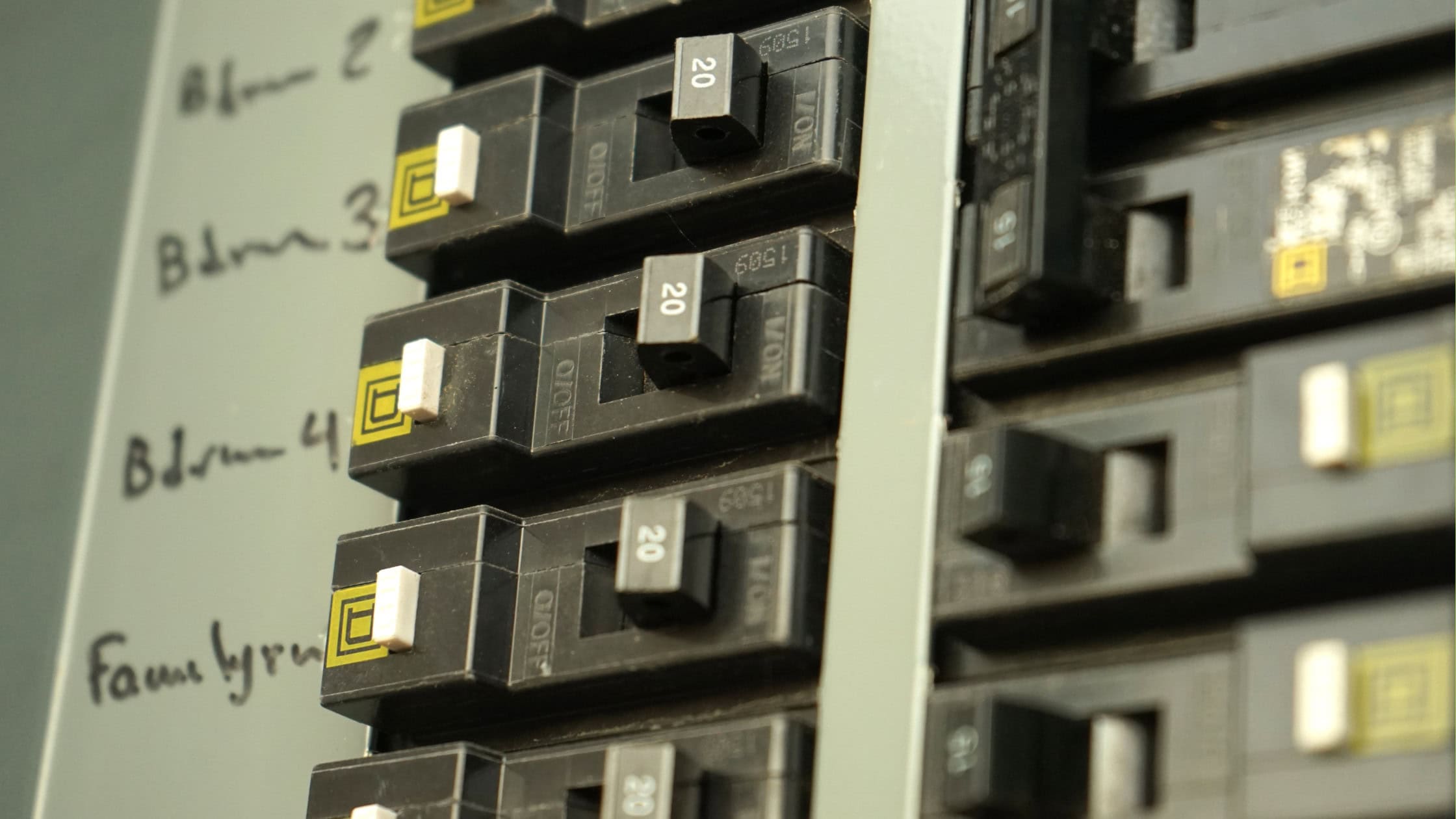
A circuit breaker is your home’s way of saying, “Whoa, that’s too much!” It’s a built-in safety switch that automatically shuts off power when a circuit is drawing more electricity than it can safely handle — which helps prevent fires or damaged wiring.
Homeowners Ask Us All the Time:
Q: Why did my breaker trip? A: Most often, it’s because too many things were plugged into one circuit (hello, hairdryer + space heater). It could also mean a short circuit or a ground fault — both of which can signal wiring issues or a faulty appliance.
Q: How do I reset it — safely? A: First, unplug whatever was running on that circuit. Find the breaker that’s tripped — it’ll usually be halfway between ON and OFF. Flip it all the way to OFF, then firmly back to ON. If it clicks off again right away, stop there and call a licensed electrician.
Q: Is it bad if my breaker trips a lot? A: Yep. Frequent tripping is your home’s way of telling you something’s wrong — like aging wiring, an overloaded circuit, or an appliance that’s on its last legs.
Want to Troubleshoot Further?
Here’s how Bryan explains it: “If the same breaker keeps tripping, it’s often one of three things — an overloaded circuit, a short circuit, or a ground fault.”
Overload: Too many devices drawing power at once (think toaster, microwave, and fridge all sharing one circuit).
Short circuit: A hot wire touches a neutral or another hot wire, causing a surge.
Ground fault: Electricity is escaping to the ground — often through a damaged wire or appliance.
DIY Tip: Try unplugging devices one at a time and resetting the breaker. If it holds after removing something, that item might be the problem.
Safety First: If you’re using a multimeter or circuit tester, always shut off power at the panel before inspecting outlets. Not comfortable? Don’t guess — call us.
Bryan’s Pro Tip:
Label your breaker panel. It might seem small, but when the power’s out and time matters, knowing which switch does what can make all the difference. “Next time we’re out for service, we can help you map it out,” Bryan says.
Still Tripping? Let’s Take a Look.
Some breaker issues are simple. Others point to deeper wiring or safety concerns. Either way, we’re here to help.
Call Bryan Hindman Electric — we’re local, licensed, and always happy to help you get to the bottom of what’s going on.
Share:
Need Help With Your Project?
Ready to Get Started?
Whether you need service, have questions, or want a quick estimate,
we're here to help.

 What’s a Circuit Breaker, Anyway?
.png)
-1.png)