
Hurricane Preparation
If you’re planning to use a portable generator during a hurricane, there’s one question you should answer before the power goes out:
Is your home actually ready for it?
Having a generator available is...
…getting ready for work, plugging in your hair dryer, and suddenly discovering the outlet has no power?
Or maybe your coffee maker stops working in the kitchen, and you can't figure out why the breaker hasn't tripped.
It may surprise you to know that the problem could be a GFCI outlet located somewhere else in your home.
GFCI stands for Ground Fault Circuit Interrupter. These special outlets are designed to help protect people from electrical shock by quickly shutting off power when they detect an electrical imbalance.
Unlike a standard outlet, a GFCI constantly monitors the flow of electricity. If something isn't right, it cuts the power in a fraction of a second.
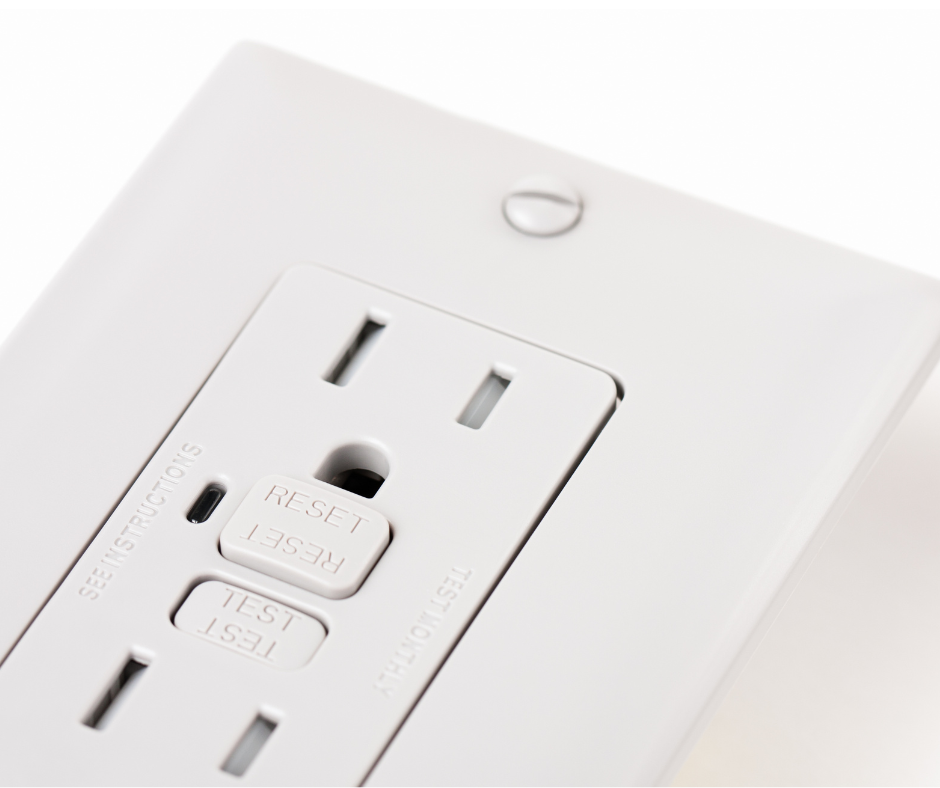
Most GFCI outlets are easy to spot because they have two small buttons in the center:
These buttons are usually black, white, or red depending on the manufacturer. If you see these buttons, you are looking at a GFCI outlet.
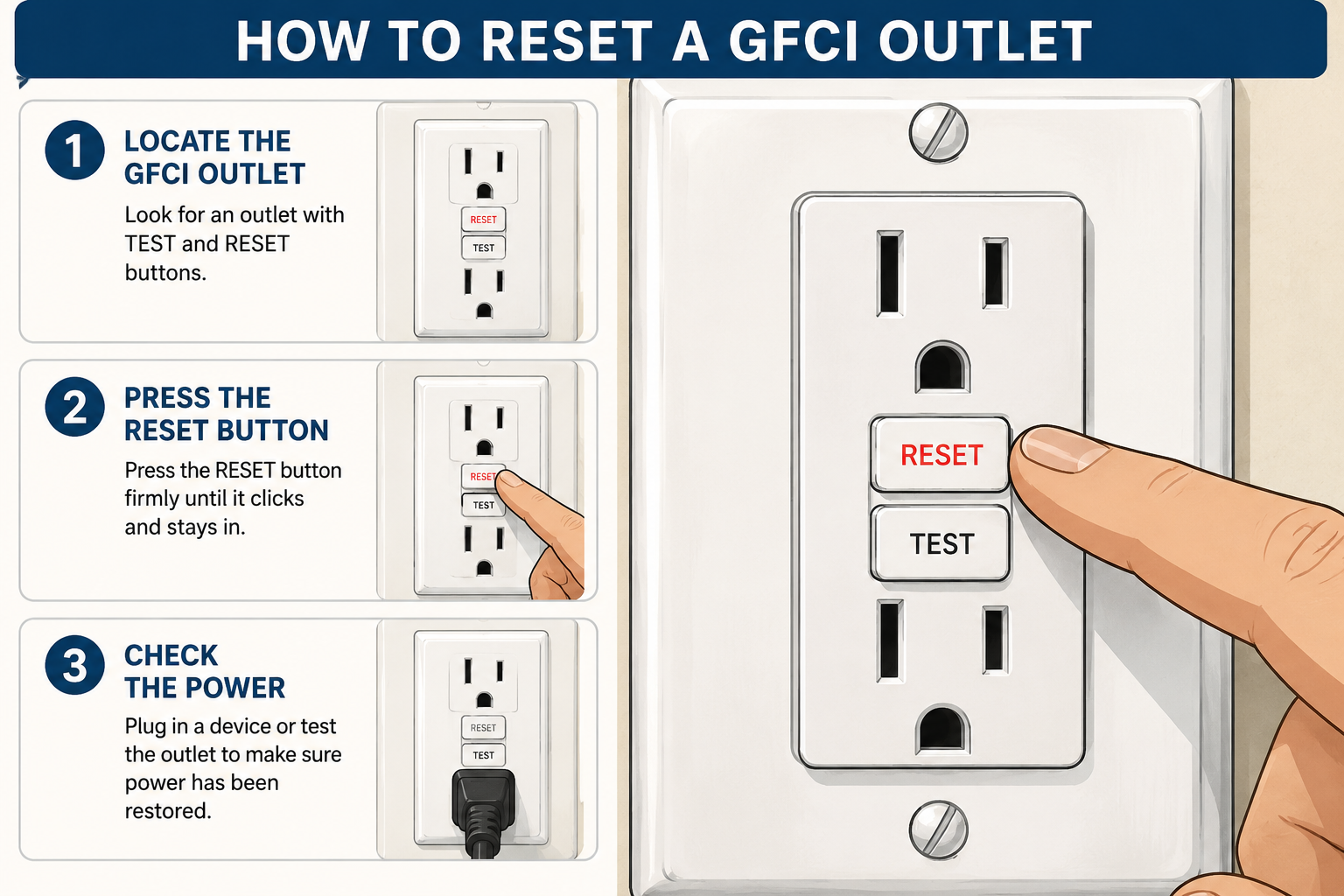
If a GFCI trips, restoring power is usually simple:
If the outlet won't reset or continues tripping, it may be time to have a licensed electrician investigate the issue.
This is one of the most common questions homeowners ask.
In newer homes, many required outlets are protected by GFCI circuits. However, that doesn't necessarily mean every bathroom, kitchen, laundry room, or garage has its own GFCI outlet.
For example, your bathroom outlet may suddenly stop working because the GFCI protecting it is actually located:
Just because outlets are close to one another doesn't mean they're on the same circuit.
Before assuming there's a major electrical problem, it's worth checking other GFCI outlets throughout the house to see if one needs to be reset.
Not always.
Many older homes, like many in Sun City Center or some older Brandon and Apollo Beach neighborhoods, were built before GFCI protection became a standard requirement, so they may have few—or even no—GFCI outlets installed.
Over the years, electrical codes have expanded the locations where GFCI protection is required because of the added safety benefits. If you live in newer neighborhoods in Fishhawk, Wimauma, Riverview and throughout Southern Hillsborough county, you're probably just fine.
Current electrical codes generally require GFCI protection in areas where electricity and moisture are likely to be close together, including:
Recent code updates have also expanded GFCI requirements to include additional appliances and locations, including many refrigerator circuits.
Will that sometimes be inconvenient? Possibly. GFCI-protected circuits can be more sensitive and may occasionally trip when homeowners least expect it.
However, these requirements exist for one important reason: safety.
GFCI outlets are one of the simplest but most important safety devices in your home's electrical system.
Knowing what they look like, how to reset them, and understanding that one GFCI can protect multiple outlets can save you time, frustration, and unnecessary worry the next time an outlet suddenly stops working.
And if you're ever unsure why a GFCI keeps tripping or whether your home has the protection it needs, it's always a good idea to consult a qualified electricial.
Still have questions about your home's electrical system? You may also enjoy:
.png)
-1.png)