In short, you want the right number of alarms, in the right places, of the right type, wired or battery‑backed, and tested regularly.
Common Questions And Clear Answers About Home Smoke And Carbon Monoxide Detectors
1. How many detectors do I need? Where exactly?
For smoke alarms: According to building code guidance (e.g., IRC R314) you should have a smoke alarm in each sleeping room, outside each separate sleeping area (for example in the hallway serving bedrooms), and on every level of the home (including basements, habitable attics).
For CO alarms: If your dwelling has a fuel‑burning appliance or an attached garage, then you need a CO alarm outside each separate sleeping area (in the immediate vicinity of the bedrooms). If the fuel‑burning appliance or attached garage opens into a bedroom, then one needs to be inside the bedroom.
Examples:
- A single‑story home with two bedrooms and a hallway → smoke alarm in Bedroom 1 + Bedroom 2 + hallway outside them + basement (if applicable).
- CO alarms: outside bedrooms (in the hallway), plus possibly in the garage area or near the fuel appliance.
Tip: If you have multiple floors/home has a basement or attic, it becomes more important to ensure coverage on each level.
2. Difference between smoke alarm vs smoke detector vs CO alarm
- Smoke alarm (often in a home): unit that detects smoke, has built‑in alarm.
- Smoke detector sometimes refers to the sensing device often used in larger systems tied into a fire‑alarm panel. According to one article: “smoke alarms are not in the Code” (NEC) in isolation—they’re in building/fire codes.
- CO alarm (or CO detector) senses carbon monoxide gas. The standard for homes is typically UL 2034 for CO alarms.
Many units today are combination smoke + CO alarms (which can meet both UL 217 for smoke and UL 2034 for CO) and may simplify installation.
3. Hard‑wired vs battery operated — what’s the difference?
Hard‑wired with battery backup: In new construction or substantial remodels, codes frequently require smoke alarms to be wired into the home electrical system and have a battery backup so they work during a power outage.
Battery‑operated: Permitted in some existing homes, or where rewiring is impractical. But they require periodic battery changes and might not be interconnected with other alarms.
Why hard‑wired is preferred:
- Power supply is constant, less risk of dead battery
- Easier to interconnect multiple alarms so that if one triggers, all alarms do
More reliable for life‑safety coverage
Battery‑only units: Are acceptable but come with greater risk if battery is neglected.
4. Why interconnection matters
If your home requires multiple alarms (which most do) then interconnection means: if one alarm goes off (say in the hallway), all alarms in the home sound. That gives you maximum warning. Many codes/building regulations require this.
Hard‐wired alarms often come with a “third wire” (in addition to hot and neutral) that carries the interconnect signal.
Battery units may have wireless interconnect features, so check manufacturer instructions.
5. Placement details
Smoke detector:
- Install on ceiling or high on the wall. On walls, no farther than 12″ from ceiling surface.
- Avoid placing too close to kitchens, baths, HVAC vents, because false alarms may occur. Some sources say at least 10 ft away from cooking appliance.
- Don’t install smoke alarms in unfinished attics or garages where temperature may go below 40°F or above 100°F unless device is listed for those conditions.
CO:
- Usually installed on wall or ceiling per manufacturer’s instructions (location not as critical as smoke but must follow instructions).
- Some guidance: One on every level, in each bedroom, plus near fuel‑burning appliance.
- Generally keep away from corners where dead air may interfere with detection; follow manufacturer instructions.
6. What type of sensing technology is best?
Smoke alarms come in ionization, photoelectric, or dual‑sensor. Photoelectric is better for smoldering fires (typical home fire scenarios). Many experts recommend photoelectric or dual‑sensor for comprehensive protection.
CO alarms use sensors rated under UL 2034.
Tip: Always ensure that units are listed (UL or equivalent) and meet current code/standard requirements.
7. Wiring and power supply (NEC relevance)
While the NEC doesn’t usually lay out where a smoke alarm must be (that’s building/fire code territory), it does govern how devices are wired (e.g., branch‑circuit requirements, AFCI/GFCI where applicable).
For example, smoke alarms wired into a 120‑V branch circuit in dwellings must meet the wiring methods, and if that branch circuit requires AFCI protection, then the alarm circuit may be subject.
Tip: Always ensure wiring is permanent, dedicated where required, has battery backup if hard‑wired alarm.
8. Maintenance and lifespan recommendations
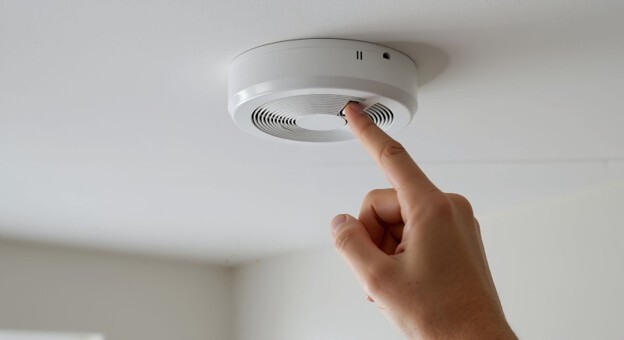
- Test alarms monthly using the “Test” button.
- Replace batteries at least annually (or sooner if the signal indicates low battery).
- Replace the entire smoke alarm unit every 10 years (many manufacturers/manufacturing standards advise this).
- Keep them clean: dust and insects can reduce sensitivity.
- For CO alarms: follow manufacturer instructions for replacement (many units have a 7‑10 year lifespan).
You may also be interested in: How to Change Smoke Detectors
9. What to do if you already have alarms but are unsure they’re compliant
- Walk through your home, mark every level and sleeping area. Note where alarms exist.
- Check the labels: are they hard‑wired + battery backup or battery only? Are they interconnected?
- If you remodel or add bedrooms/levels, update alarms accordingly.
- If you have fuel‑burning appliances (gas furnace, water heater), or an attached garage, ensure you have CO alarms too.
- If you’re unsure about code compliance or wiring, contact a licensed electrician. It’s a small investment for major peace of mind.
Quick Checklist For Homeowners
- At least one smoke alarm in every sleeping room
- At least one smoke alarm outside the sleeping areas (hallway)
- At least one smoke alarm on every floor, including basement/attic if applicable
- Smoke alarms wired and interconnected if required in your home
- CO alarm installed outside sleeping areas + near fuel‑burning appliance/garage if applicable
- Alarms are listed (UL 217 for smoke alarms, UL 2034 for CO alarms)
- Hard‑wired units have battery backup; battery‑only units are maintained regularly
- Monthly testing, annual battery changes, full unit replacement at recommended age (e.g., 10 years)
- Clear installation according to manufacturer instructions (avoid placing too close to vents, cooking appliances)
Need Help? We’re Here.
If you have questions about your existing alarms (placement, wiring, interconnection) or want to upgrade to hard‑wired smoke/CO alarms or combination units, let’s talk.
Call Bryan Hindman Electric at (813) 672-4084 or request a consultation.
Protect your home, your family, and your peace of mind.

.png)
-1.png)