Your bedroom lights suddenly stop working.
Or maybe an outlet in your kitchen isn't working anymore. Perhaps a breaker keeps tripping, or you've noticed your lights flickering.
Your first thought might be: Do I need an electrician right now?
It's a question we hear from homeowners all the time at Bryan Hindman Electric.
And we understand why.
Most homeowners aren't electricians. When something electrical stops working, there's no obvious way to know whether it's a minor inconvenience or a serious safety concern.
Here's what we want you to know: Not every electrical problem requires an emergency service call. But some electrical problems absolutely require immediate attention.
The challenge is knowing which is which.
Let's walk through some common situations, the warning signs you shouldn't ignore, and how to decide what to do next.
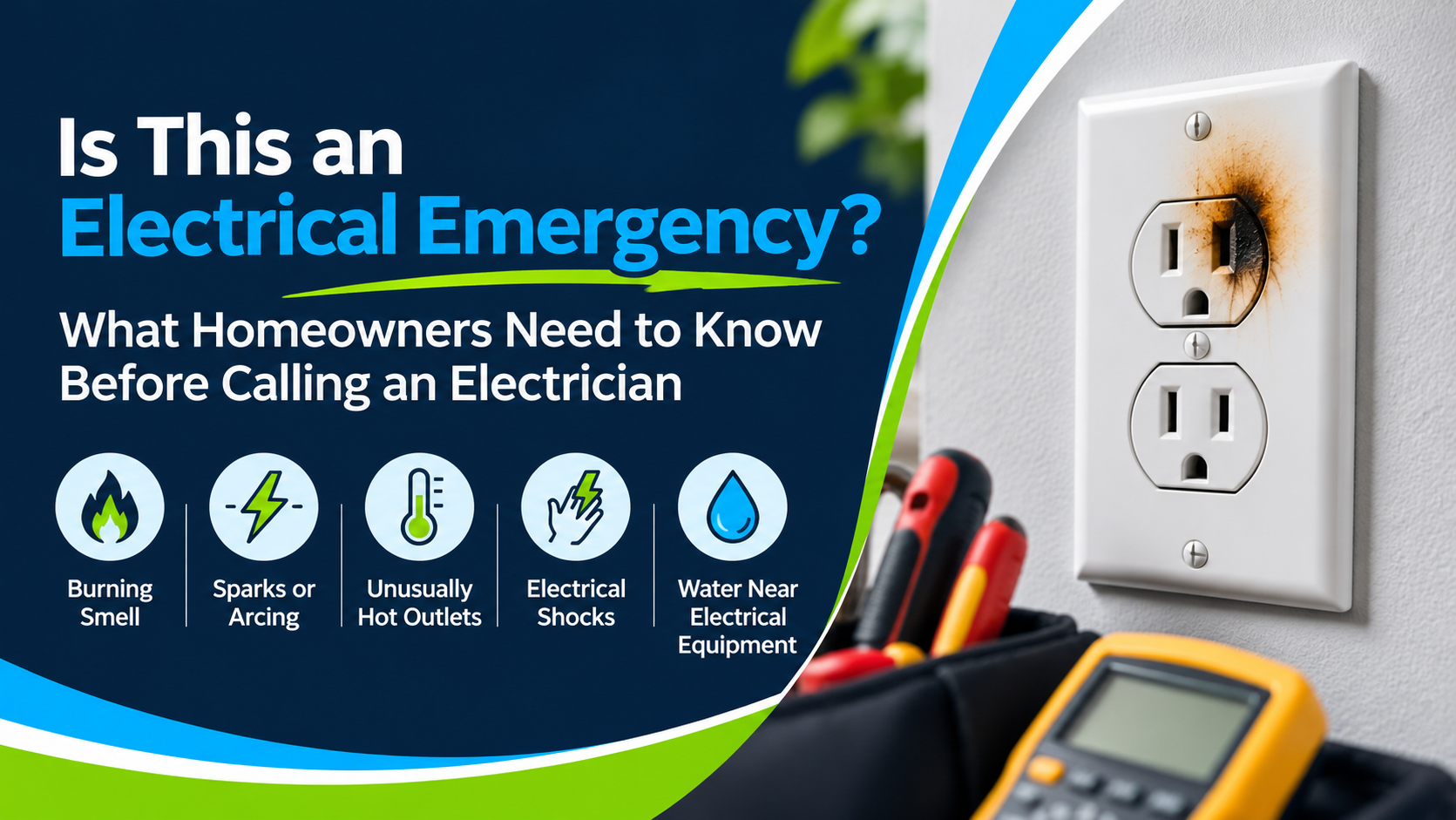
What Is Considered an Electrical Emergency?
An electrical emergency is a situation where there may be an immediate risk of fire, electric shock, injury, or significant damage.
Some warning signs are especially concerning.
1. You Smell Something Burning
If you notice a burning or melting-plastic smell coming from an outlet, switch, electrical panel, or appliance connection, take it seriously.
Overheating electrical components can create a fire hazard.
Stop using the affected equipment, avoid touching anything that may be hot, and seek urgent professional assistance. If there's smoke, fire, or immediate danger, call 911.
2. You See Sparks or Electrical Arcing
A brief spark when plugging in certain devices can occur, but repeated, large, or unusual sparking from an outlet or switch is a different matter.
Visible arcing, crackling, or sparking from electrical equipment warrants urgent attention.
Don't continue using the affected equipment or attempt to investigate exposed wiring yourself.
3. An Outlet, Switch, or Electrical Panel Is Unusually Hot
Electrical devices shouldn't become dangerously hot during normal use.
If an outlet, switch, plug, or panel feels unusually hot, there could be an overloaded circuit, damaged connection, or another electrical problem.
Avoid using the affected equipment and arrange urgent professional assessment.
4. You're Receiving Electrical Shocks
If you feel a shock when touching an appliance, switch, outlet, or other electrical equipment, don't ignore it.
Stop using the affected equipment and have the situation assessed promptly by a qualified electrician.
5. Water Has Reached Electrical Equipment
Flooding and electrical systems are a dangerous combination.
If water has entered electrical equipment, outlets, or a panel, keep away from the affected area. Do not touch wet electrical equipment or attempt to restore power yourself.
Seek qualified assistance.
What About Electrical Problems That Don't Look Like Emergencies?
This is where things get less straightforward.
Some electrical problems have simple explanations. Others can be symptoms of something more serious.
The absence of smoke or sparks doesn't automatically mean an electrical problem is safe to ignore.
Here are a few situations homeowners frequently ask about.
The Lights Went Out in One Room. Is That an Emergency?
Imagine you're watching television when the lights suddenly go out in the bedroom.
The rest of the house still has power.
Do you need an electrician immediately?
Possibly—but not necessarily.
The cause could involve a tripped breaker, a faulty device, damaged wiring, or a loose electrical connection.
Some causes are relatively straightforward to correct. Others can create dangerous conditions.
If you notice burning smells, sparking, unusual heat, or other warning signs, seek urgent assistance.
Otherwise, contact a qualified electrician, describe what happened, and ask how promptly the problem should be assessed.
Don't assume it's safe to wait several days simply because only one room is affected.
One Outlet Stopped Working. Should I Be Worried?
A dead outlet is another common reason homeowners call us.
Sometimes the issue is related to a GFCI device or a circuit interruption. Other times, the problem involves a failed receptacle or damaged connection.
The important thing is that you can't reliably determine the cause just by looking at the outlet.
If you notice heat, discoloration, a burning smell, sparking, or evidence of damage, stop using it and seek urgent help.
If there are no obvious warning signs, contact an electrician for guidance on the appropriate timing of an inspection.
My Breaker Keeps Tripping. Is That Dangerous?
A circuit breaker is designed to interrupt electrical power under certain fault or overload conditions.
If a breaker trips repeatedly, something needs attention.
It might be an overloaded circuit, a faulty appliance, a wiring problem, or another issue.
Don't repeatedly reset a breaker that keeps tripping.
A qualified electrician should evaluate the cause. If the situation also involves heat, burning smells, sparking, or other signs of danger, seek urgent assistance.
My Refrigerator Is Plugged Into an Extension Cord. Do I Need Emergency Service?
This is a situation that can confuse homeowners.
Perhaps the outlet behind the refrigerator stopped working, so someone plugged the refrigerator into an extension cord to reach another outlet.
It may seem like a convenient temporary solution.
But refrigerators generally should be connected directly to a properly installed, suitable receptacle. Ordinary extension cords can overheat or create other hazards, particularly when used for high-demand appliances or as permanent wiring.
Does that automatically mean you need an emergency electrician at midnight?
Not necessarily. But it does mean the arrangement should be corrected promptly and safely.
Contact a qualified electrician to determine the appropriate solution and urgency. If there are signs of overheating or electrical damage, seek urgent assistance.
Why It's Important Not to Guess
Here's something we've learned from working with homeowners:
People usually don't know whether their electrical problem is an emergency.
They just know something isn't working, and they're concerned.
That's understandable.
But trying to diagnose an electrical problem through an internet search—or assuming something is harmless because the lights still work elsewhere—can lead to poor decisions.
A qualified electrician may need to inspect or test the system to determine what's actually happening.
That's why we believe in asking questions, explaining possible concerns, and being clear about when a professional assessment is necessary.
Do Emergency Electricians Cost More?
Often, yes.
Emergency electrical service may involve after-hours labor, priority dispatch, or changes to an electrician's existing schedule.
Those additional demands can result in higher service charges.
Sometimes the extra cost is absolutely justified.
If there's an immediate electrical danger, prompt professional help is more important than avoiding an emergency fee.
But when a qualified professional determines that a regular appointment is appropriate, scheduling service may be more economical.
We explain that difference in our companion article, When Do You Really Need an Emergency Electrician?
How Bryan Hindman Electric Handles Electrical Concerns
At Bryan Hindman Electric, we believe homeowners deserve clear information—not scare tactics.
When you call us about an electrical problem, we want to understand what you're experiencing and help you identify the appropriate next step.
For regular repair appointments, our rate is $205 per hour plus materials, with a one-hour minimum.
For new electrical installations and upgrades, we provide free estimates.
If a situation appears potentially dangerous, we won't encourage you to wait for our next available appointment simply because we're booked.
And if regular scheduling is appropriate, we'll explain our availability and pricing so you can make an informed decision.
The Bottom Line
Not every electrical problem requires emergency service.
But not every problem that looks minor is safe to ignore, either.
If you notice smoke, burning smells, unusual heat, electrical shocks, significant sparking, or other serious warning signs, seek urgent help.
For other electrical concerns, contact a qualified electrician rather than guessing about the cause or how long you can safely wait.
Have an Electrical Problem and Aren't Sure What to Do Next?
Contact Bryan Hindman Electric, tell us what's happening, and we'll help you understand your service options.
If there's an immediate danger, contact emergency services rather than waiting for an appointment.
Contact Bryan Hindman Electric