
EV Charger Installation Cost in Tampa Bay & South Hillsborough
Most Tampa Bay homeowners spend between $800–$1,200 for EV charger installation, including permitting and inspection coordination.
We’ll help you determine:
-
whether a plug-in or hardwired charger is best
-
if your electrical panel can support an EV charger
-
what installation costs are included and how much you could save charging at home instead of paying for gas
-
No pressure. No surprise upgrades. Just clear answers and honest recommendations.
Plug-In vs Hardwired EV Charger Installation
Both options can be great depending on your home, budget, and long-term plans. Here’s what typically impacts pricing, what’s included, and which option may fit you best.
Hardwired EV Charger
Usually Includes:
- Permitting & inspection coordination
- Dedicated hardwired connection
- Breaker installation
- Charger mounting
May Not Include:
- Charger purchase
- Panel upgrades
- Trenching
- Long conduit runs
Plug-In (NEMA 14-50 Outlet)
Usually Includes:
- Permitting & inspection coordination
- Dedicated 240V circuit
- NEMA outlet installation
- Breaker installation
May Not Include:
- EV charger unit
- Panel upgrades
- Trenching
- Detached garage wiring
What Affects EV Charger Installation Cost?
Distance From Electrical Panel
Chargers installed farther from the electrical panel typically require more wiring and labor, increasing installation cost.
Existing Panel Capacity
Homes with full or older electrical panels may require additional electrical work before an EV charger can be installed safely.
Charger Type
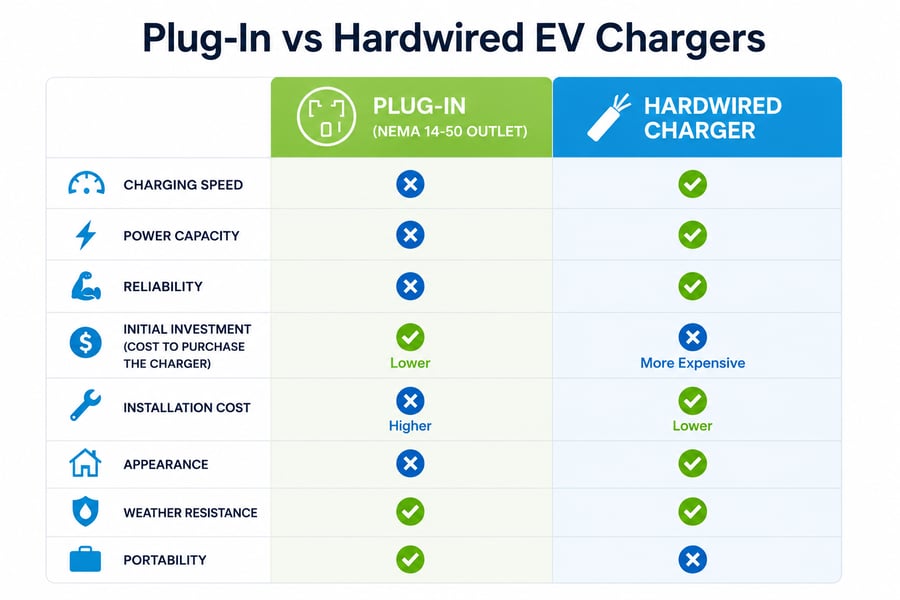
Hardwired chargers typically cost more upfront but offer faster charging and better long-term reliability than plug-in setups.
Indoor vs Outdoor Installation
Outdoor installs may require weatherproof equipment and additional protection.
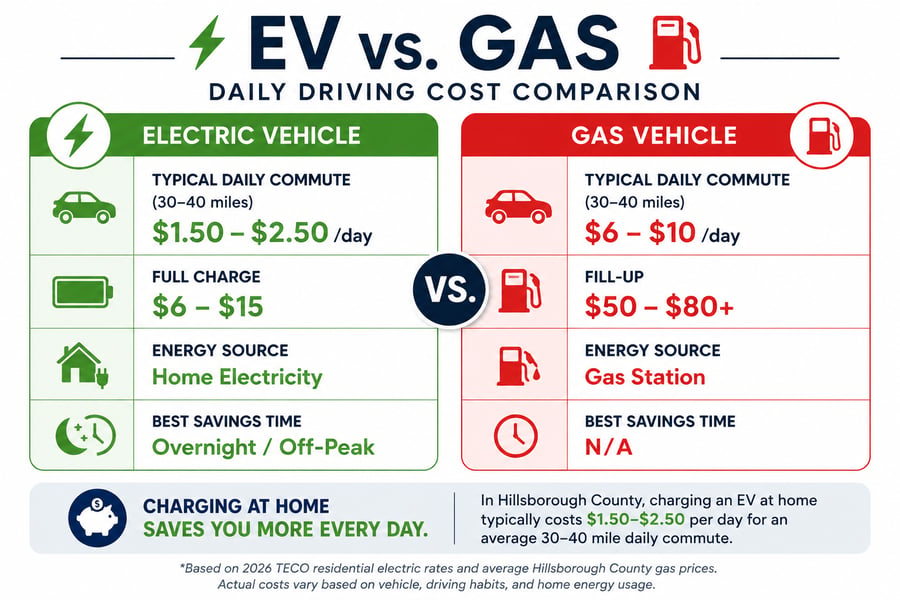
For many Tampa Bay homeowners, charging an EV at home costs dramatically less than paying for gas each month.
While exact savings depend on driving habits, utility rates, and vehicle type, many EV owners spend just a fraction of what they previously paid at the pump — especially when charging overnight at home.
Installing a Level 2 home charger also adds convenience by allowing you to start every day with a charged vehicle without relying on public charging stations.
What do most homeowners choose?
Most homeowners planning to keep their EV long term choose a hardwired Level 2 charger because it offers faster charging speeds, cleaner installation, and better long-term reliability.
Plug-in chargers are still a great option for homeowners who want flexibility or may move in the future.
During your consultation, we’ll help you choose the setup that makes the most sense based on your vehicle, electrical system, and budget.
EV Charging Cost & Pricing FAQs
-
Most Level 2 EV charger installations range from $800–$1,100, including permit and inspection coordination. Final pricing depends on:
- Distance from the electrical panel
- Existing electrical capacity
- Whether panel upgrades are needed
- Trenching or long wire runs
Simple installations generally cost less, while more complex electrical work may increase pricing.
-
For a typical daily commute of 30–40 miles, most EV owners spend around $1.50–$2.50 per day charging at home.
Actual charging costs depend on:
- Local electricity rates
- Vehicle efficiency
- Driving habits
- Charging schedule
-
A full home EV charge usually costs between $6 and $15, depending on:
- Battery size
- Utility rates
- Time of charging
- Vehicle model
Charging overnight during off-peak hours is often the most affordable option.
-
Yes. Charging an electric vehicle at home is typically much less expensive than fueling a gas-powered vehicle.
A gas vehicle driven 30–40 miles per day may cost:
- $6–$10 per day in gasoline
- $50–$80+ per fill-up
By comparison, most EV owners spend only a fraction of that charging at home.
-
The exact increase depends on:
- Your EV model
- Daily driving distance
- Utility rates
- Charging times
However, most homeowners find that home EV charging costs significantly less than monthly gasoline expenses.
-
The most affordable time to charge an EV is typically overnight during off-peak utility hours, when electricity rates are lower.
Many homeowners save even more money by scheduling charging overnight.
-
It depends on the installation setup and long-term goals.
Hardwired chargers may cost slightly more upfront but often provide:
- Faster charging speeds
- Better reliability
- Lower long-term maintenance issues
Plug-in chargers can sometimes reduce installation costs and offer greater portability and flexibility.
-
Yes. A Level 2 home EV charger can help homeowners reduce long-term transportation costs by:
- Lowering daily fueling expenses
- Avoiding higher public charging costs
- Taking advantage of off-peak utility pricing
- Reducing reliance on gas stations
Many homeowners also value the convenience of starting each day with a fully charged vehicle at home.
EV Charger Types & Installation Options
-
Level 2 chargers require professional installation but charge significantly faster—often adding 20–40 miles of range per hour. Most homeowners choose Level 2 charging because it’s more practical for everyday use.
-
Level 1 chargers use a standard household outlet and are best for very light daily driving. They charge slowly and can take over 24 hours to fully recharge some EVs.
Level 2 chargers require professional installation but charge significantly faster—often adding 20–40 miles of range per hour. Most homeowners choose Level 2 charging because it’s more practical for everyday use.
-
Tesla chargers are designed specifically for Tesla vehicles, while universal chargers work with most EV brands using the standard J1772 connector.
Many newer chargers are compatible with multiple vehicle types, including Teslas with the proper adapter. We can help you choose the best charger based on your current vehicle and any future EVs you may own.
-
Smart EV chargers connect to Wi-Fi and give you more control over your charging experience.
Features may include charging schedules, energy usage tracking, utility rate monitoring, and mobile app controls. Smart chargers are a popular choice for homeowners looking to maximize convenience and energy savings.
-
Yes, EV chargers can absolutely be installed outdoors.
Most modern chargers are built to handle rain, heat, humidity, and other outdoor conditions when installed properly. We’ll make sure your charger is safely mounted, weather-protected, and code-compliant for long-term performance.
-
Sometimes. You may need an electrical panel upgrade if your panel is outdated, overloaded, frequently trips breakers, or doesn’t have enough capacity for new appliances like an EV charger.
Many times, homeowners need a subpanel or nothing at all.
Homes with older panels or limited amperage may also benefit from an upgrade for safety and reliability. We’ll inspect your system and let you know if an upgrade is truly necessary.
EV Charger Installation Across South Hillsborough County
We install EV chargers for homeowners throughout Riverview, Apollo Beach, Parrish, Valrico, Sun City Center, FishHawk, and surrounding areas.
FAQ about working with us
Thinking about getting an electrical quote? You’re not alone—homeowners across Riverview, Apollo Beach, Sun City, FishHawk, and the greater Tampa Bay area ask us the same questions every week. In this video, the team at Bryan Hindman Electric explains what you should know before your appointment so you feel confident, prepared, and ready for your project.
Not Sure What's Going On?
Let's Take a Closer Look
You don’t need to diagnose the problem yourself. If something in your home’s electrical system feels off, we’ll help you understand what’s happening and what your options are.