
Have a quick question? Call (813) 672-4084
We'll point you in the right direction.
EV Charger Installation in Riverview
Get the Right Setup for Your Home (Without Overpaying or Guessing)
Not every home needs the same setup—and not every upgrade is worth the cost. We’ll help you understand what your home actually needs so you can make the right decision with confidence.
- Takes about 60 seconds
- Get a personalized recommendation
Real Projects. Real Results.
.jpg?width=1500&height=2000&name=car%20charger%20(1).jpg)
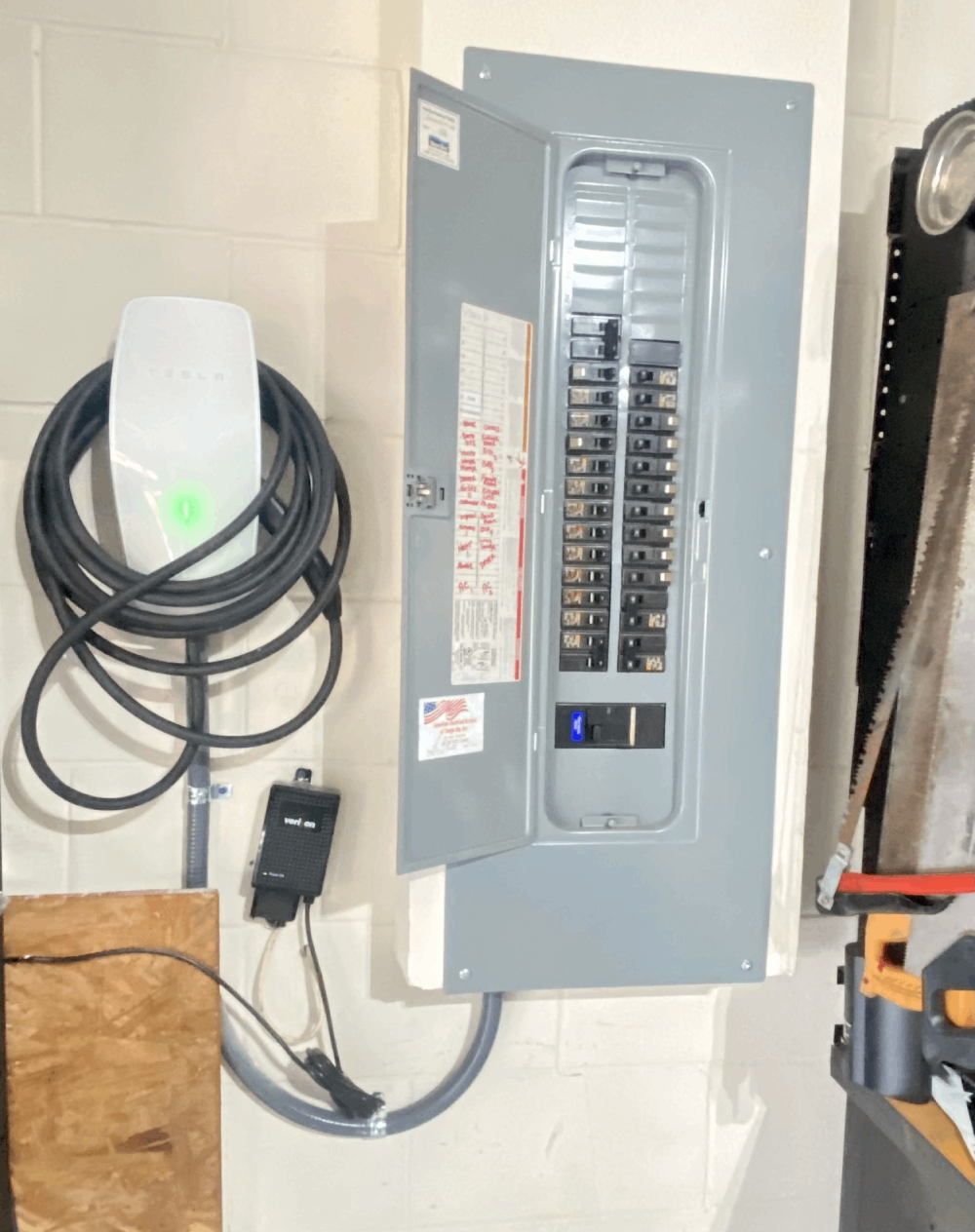
We’ll tell you exactly what your home needs—and just as importantly, what it doesn’t.
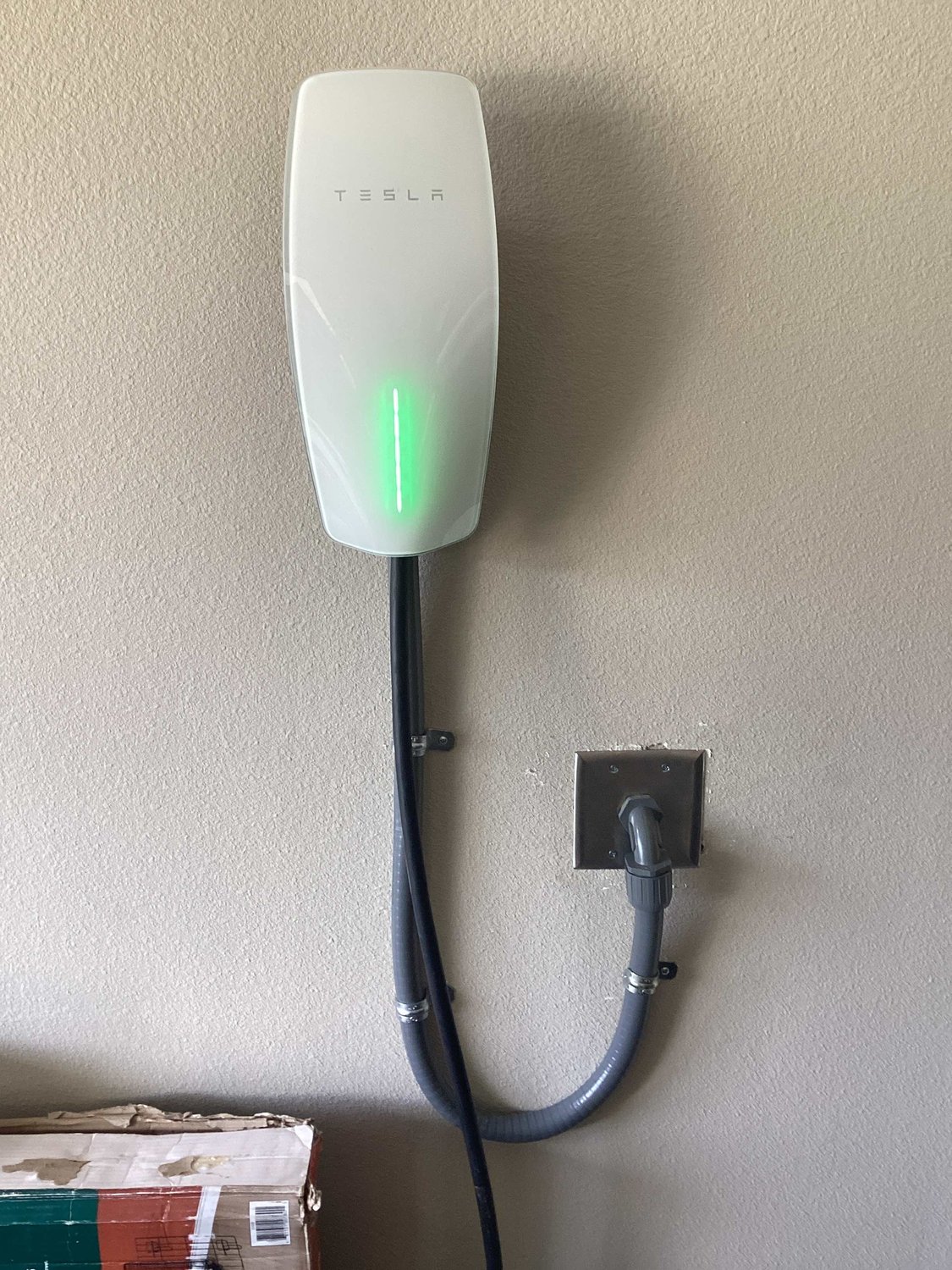
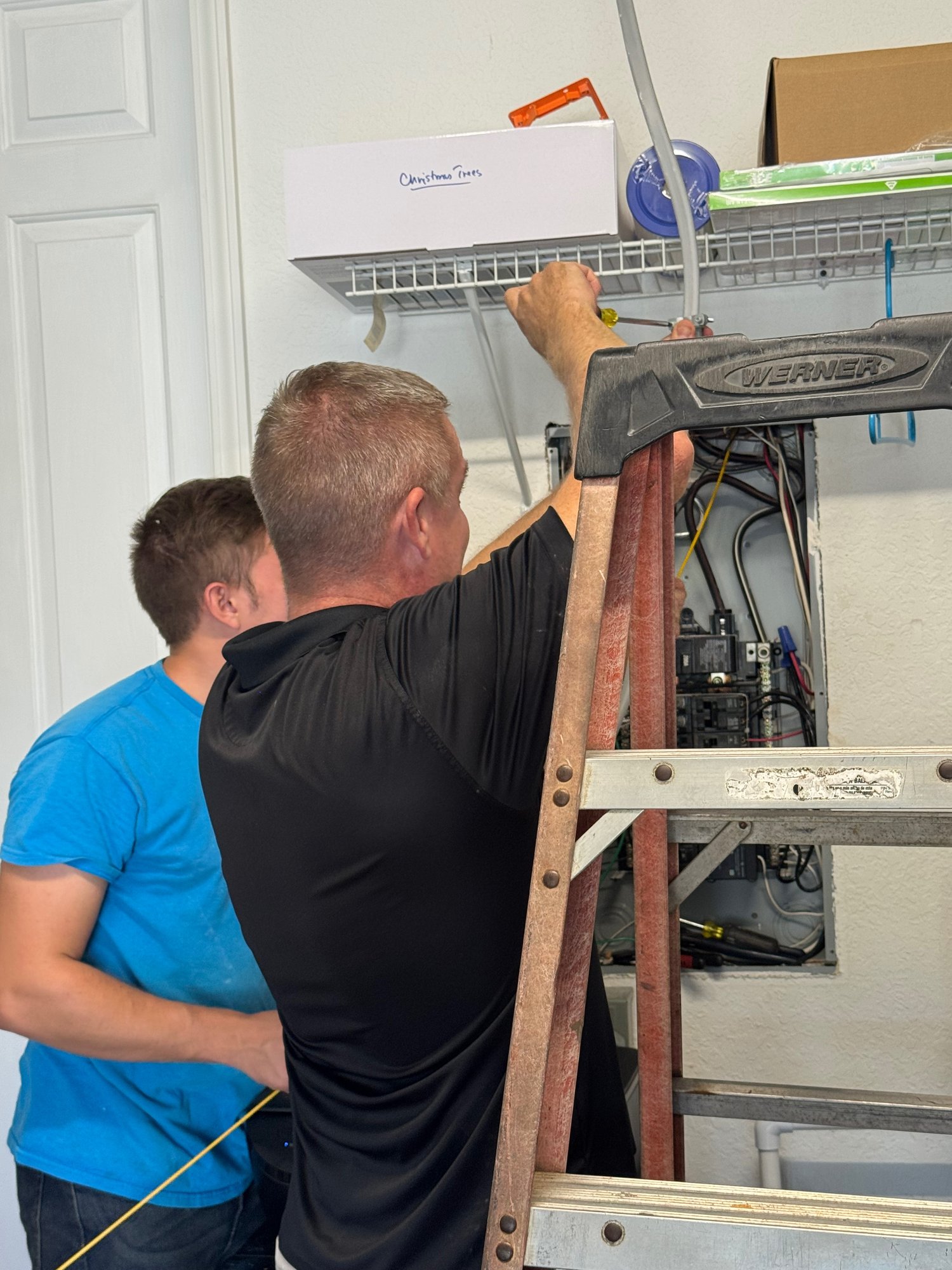
Miles from Riverview had been putting off buying an EV because he thought installing a home charger would be expensive. Like most homeowners, he asked Bryan two questions: "How much is this going to cost?" and "Do I need a new electrical panel?"
After taking a look, Bryan had good news—Miles didn't need a panel upgrade. He also recommended a hardwired charger, which turned out to be the less expensive option for his home.
What Does It Cost to Install an EV Charger?
That’s one of the first questions most homeowners ask—and the honest answer is, it depends on your home setup. Most installs are $800 - $1,100 including the county permit.
Instead of giving you a one-size-fits-all number that may not apply to you, we’ve broken down the real factors that affect cost so you can understand what to expect.
See EV Charger Pricing Breakdown
In many cases, we’ll actually tell you if you don’t need certain upgrades—saving you money and avoiding unnecessary work.
Not Sure What Your Home Actually Needs? You’re Not Alone.
Most homeowners we talk to are unsure about a few key things:
- Do I even have the right electrical setup?
- Will I need a panel upgrade?
- Am I about to spend way more than I should?
And honestly, those are the right questions to be asking.
Click here to figure out if you need a panel change for your EV install (or not)
Because the truth is—EV charger installation isn’t one-size-fits-all.
Some homes are simple. Others require upgrades. And in many cases, people are told they need things they actually don’t.
That’s where we’re different.
We’ll walk you through exactly what makes sense for your home—and help you avoid paying for anything unnecessary.
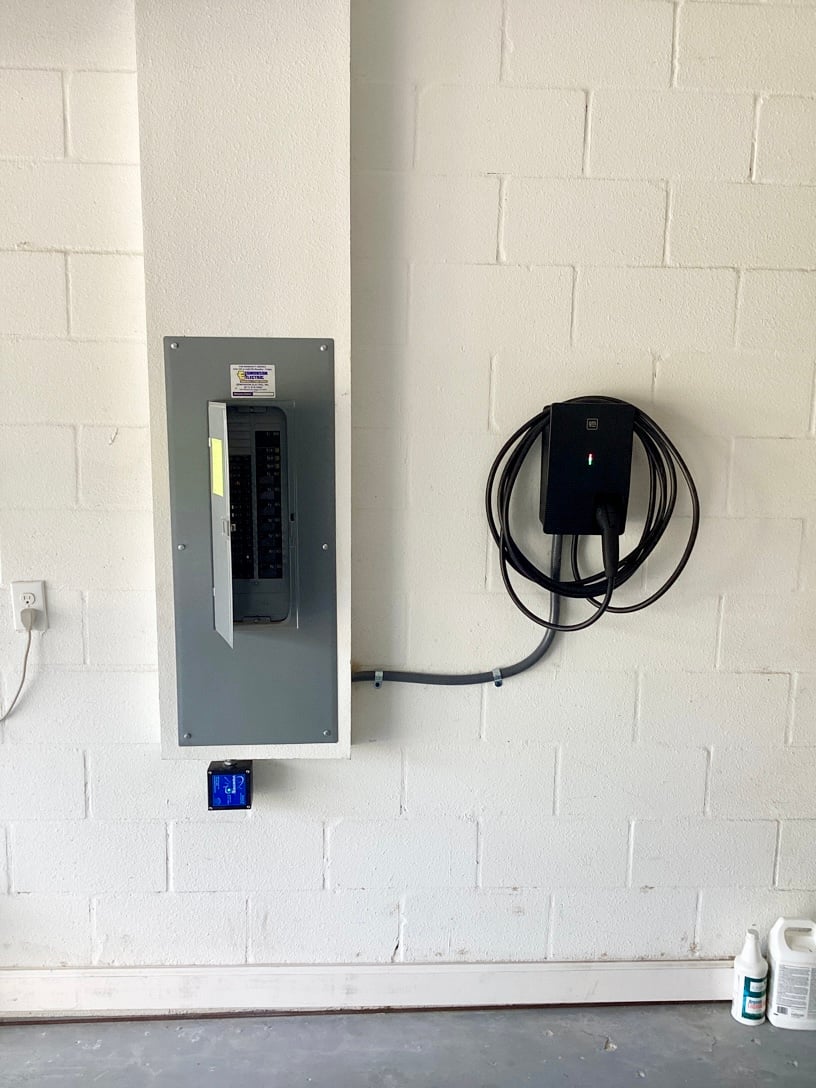
What Determines the Cost?
Your panel size
(you'll need 150-200 amp minimum)
Available breaker
space in the panel
How much power
you're already using
Type of Charger (outlet or
Level 2 charging station)
What the Installation Process Actually Looks Like
Here’s what typically happens when you work with us:
We look at your current electrical setup
We determine what’s actually needed (and what’s not)
We walk you through your options—clearly and honestly
We install everything safely and up to code
No pressure. No guesswork. No surprises.
Plug-In vs Hardwired EV Charger Finder
Answer a few quick questions based on your priorities, and we’ll help you determine which EV charger option is best for your home.
1. Is faster charging important to you?
2. Is this a long-term home upgrade?
3. Do you want the cleanest permanent setup?
4. Is portability important to you?
5. Which matters more for your EV charger setup?
Your Best Match: Hardwired EV Charger
- ✓ Faster charging
- ✓ Better long-term reliability
- ✓ Cleaner permanent setup
- ✓ Lower install cost in many homes
Based on Your Answers, a Plug-In Charger Could Be a Good Fit
- ✓ Lower upfront charger cost
- ✓ Portable & flexible
- ✓ Easier relocation or replacement
- ✓ Great for temporary setups
Every home is different.
We’ll help you determine what actually makes sense for your setup — and what doesn’t.
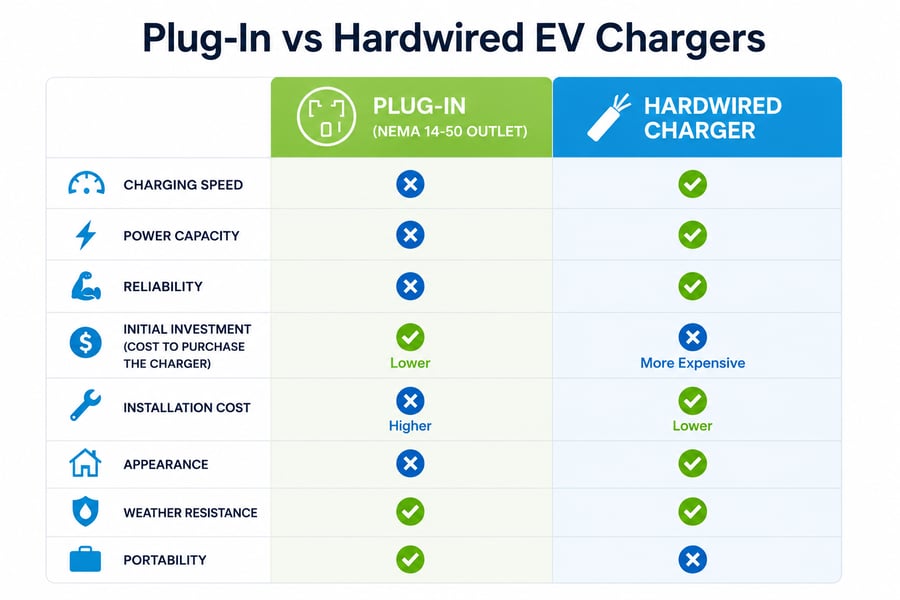
Plug-In vs Hardwired EV Chargers
Hardwired EV chargers are often the best long-term option because they support faster charging speeds, create a cleaner installation, and can reduce installation costs in some homes. Plug-in chargers still work well for homeowners who want flexibility or portability. While the cost of the charger itself is higher upfront, the cost of installation is actually lower, and may homeowners find that hardwired chargers offer savings and convenience in the long run.
These are the exact questions homeowners ask us before installing a charger:
-
This is the #1 question homeowners ask—and the honest answer is:
It depends on your panel—but in many cases, no upgrade is needed.
Here’s what we typically see:
- Many newer homes (150-amp panels with available space) don’t need any upgrades at all
- Some homes just need a dedicated circuit added
- If your panel is full, we may recommend adding a subpanel instead of replacing everything
- In some cases—especially with older equipment—a panel upgrade is the safest option
We don’t automatically recommend a panel upgrade.
Click here to figure out if you need a panel change for your EV install (or not)
We look at your actual setup first and recommend the most practical (and cost-effective) option.
-
Yes, consulting with an electrician ensures a safe, efficient, and code-compliant installation. During the consultation, we can assist with:
1. Electrical Panel Check: Ensure the panel has sufficient capacity and available slots.
2. Circuit Requirements: Recommend appropriate breaker size and wiring.
3. Location Evaluation: Suggest convenient, accessible locations close to the panel.
4. Environmental and Safety Factors: Address weather protection, ventilation, grounding, and GFCI needs.
5. Structural Support: Determine the best mounting options and check for structural support.
6. Future Needs: Plan for potential upgrades or additional EVs.
7. Code Compliance: Ensure installation meets local codes and obtain necessary permits.
8. Cost and Timeline: Provide a cost estimate and timeline for the installation. -
-
If your panel is safe and has capacity, we won’t recommend replacing it.
In many cases, a full panel upgrade isn’t necessary—we’ll show you all your options.
Some older panels are known to have safety issues and may need to be replaced before installing an EV charger.
These include:
- Challenger
- Zinsco
- Sylvania
- Federal Pacific
If you have one of these, we’ll let you know right away and explain your options.
-
-
Level 2 chargers (hired wired) are recommended for regular home charging. You can choose to install a GFCI-protected outlet or have the charger hardwired. The benefits of each option can be discussed during your consultation.
To learn more read our blog post Hardwired or Plug-In EV Chargers for My Home.
-
Most EV charger installations fall between $500–$800 for the work itself.
However, most homeowners don’t realize there are a few additional steps required to complete the job properly.
These can include:
- Permit fees (typically around $80 in our area)
- Inspection scheduling
- Coordinating with the county to ensure everything passes
That’s why most real-world installations end up between $800–$1,100 total
The difference isn’t in the installation—it’s in everything that needs to happen around it.
We include all of this upfront, so you know exactly what to expect before any work begins.
-
Most EV charger installations don’t require you to figure out technical details—that’s our job.
In many cases, your existing electrical system can support a charger. If not, you may only need a small upgrade, like a dedicated circuit or minor adjustments.
You don’t automatically need a panel upgrade (honestly, we rarely see that). Of course, every home is a little different.
We’ll evaluate your setup and handle everything needed to ensure the installation is safe, up to code, and built to handle your charging needs.
Click here to figure out if you need a panel change for your EV install (or not)
-
Installation time varies significantly based on specific needs and location. It can range from as little as two hours to a full day. Your electrician will provide a more accurate timeframe during the initial consultation.
-
We strongly recommend surge protection—it helps protect your charger and your home from unexpected power surges.
It’s not currently required by code, but it will become standard for EV chargers very soon.
There is an additional cost, and we’ll walk you through your options ahead of time so you can decide what’s best—no surprises.
-
Yes, EV charger installations require permits and inspections to ensure everything meets local and national electrical codes.
We handle the entire process - from permitting to final inspection - so you don't have to worry about compliance or safety issues.
We’ll tell you exactly what it’ll cost—and if you don’t need an upgrade, we’ll say that too.
Need flexible payment options?
We offer financing to help spread out the cost. Ask us during your estimate.
Not sure what your home needs for an EV charger?
We’ll take a look at your setup and walk you through:
- The best installation option
- What it will realistically cost
- And whether any upgrades are needed
No pressure—just clear answers so you can make the right decision.